34 pages · About 70 minutes · PDF + audio version, delivered instantly
$20
Pay once, download straight away. 30-day refund if it isn't useful.
Out now
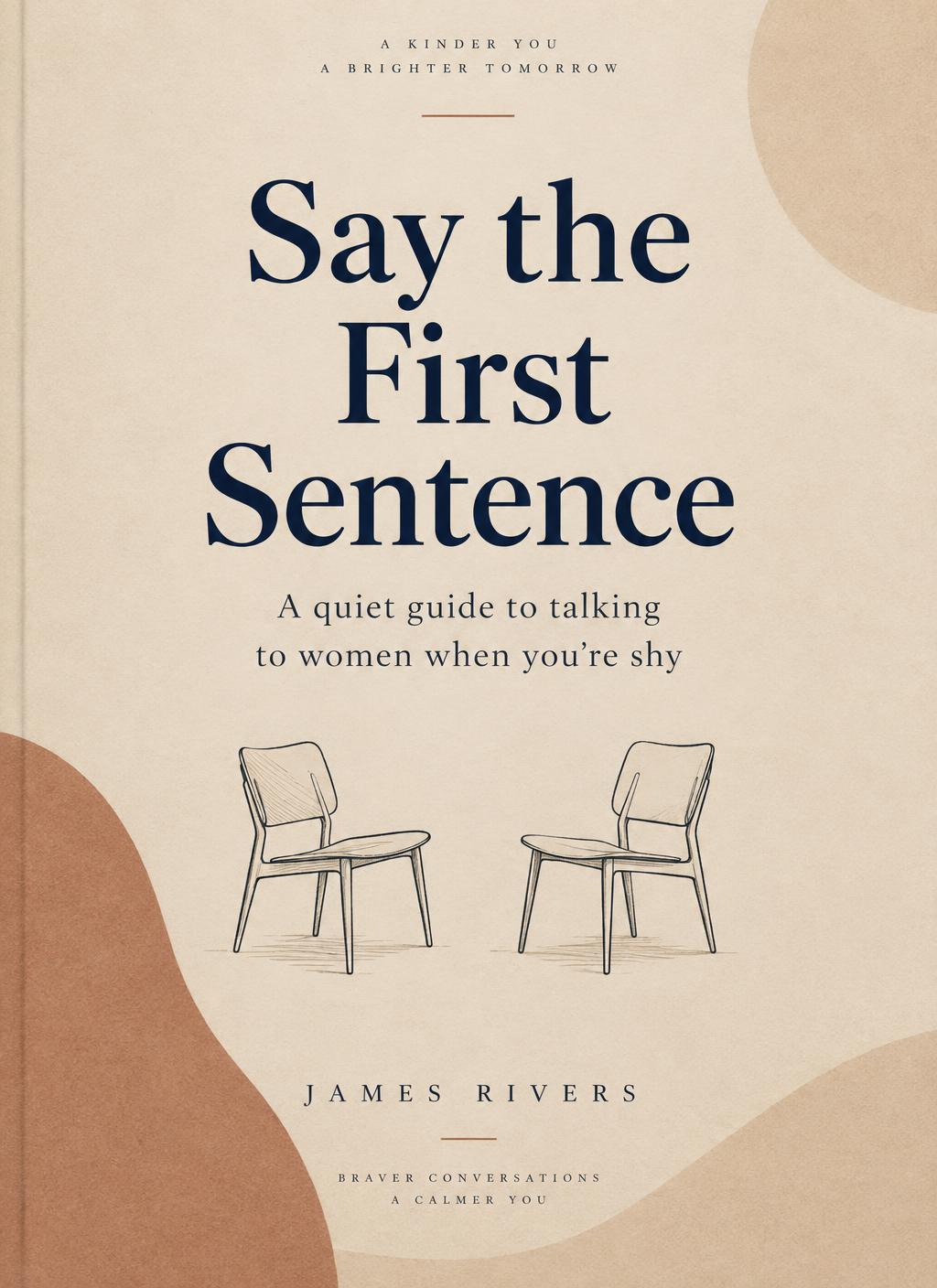
Say the First Sentence
A quiet guide to talking to women when you're shy
Not a script, not a system, and definitely not a set of tricks. This is a short, practical guide built on what psychologists actually know about shyness, anxiety and conversation — turned into a step-by-step practice you can start this week without pretending to be someone else.

This is for you if
- You freeze up, rehearse the sentence, and then walk past anyway.
- You replay conversations for hours afterwards, looking for what you got wrong.
- You have read pickup advice and found it manipulative, embarrassing, or both.
- You want to be liked for who you are, not for a character you perform.
Read a sample
From chapter 9: The first sentence can be ordinary
You have been trying to solve the wrong problem. You have been searching for a sentence good enough to justify the interruption — clever, warm, memorable, disarming. That sentence does not exist, and the search for it is the reason you are still standing by the door.
Openers are close to irrelevant. What carries a conversation is what happens in the ninety seconds after it, and almost all of that is attention: whether you listen, whether you follow up, whether the other person feels like a person rather than an audience.
So lower the bar until it is almost insulting. "Hi — is this seat taken?" is a complete opener. So is a comment about the queue, the weather, the book in her hand. The purpose of the first sentence is not to impress anyone. Its only job is to end the silence so the real conversation has somewhere to begin.
Ideas you can see
Four illustrated guides turn the psychology into something you can remember in the moment.
The spotlight gap
Why other people notice far less than your anxiety predicts.
Your exposure ladder
How to move from tiny social reps to a clear, respectful ask.
The four-week path
A calm practice rhythm built around repetition, not grand gestures.
The conversation loop
Listen, follow up, share—and let connection build in turns.
What's inside
Part one — Why it feels this hard
- 1.What shyness is — and is not
- 2.The spotlight in your head
- 3.Safety habits that keep fear alive
- 4.Stop the replay loop
Part two — Steadying yourself
- 1.Put your attention outside
- 2.Calm the body, then go anyway
- 3.Build your practice steps
- 4.A four-week plan
Part three — The conversation itself
- 1.The first sentence can be ordinary
- 2.Questions that show attention
- 3.Share without turning it into a monologue
- 4.Read interest — and its absence
- 5.End clearly and ask respectfully
Part four — After
- 1.Put rejection back in proportion
- 2.Build a social life, not a hunting ground
- 3.When to get proper help
- 4.Sources and further reading
Questions before buying? The FAQ covers delivery, refunds and formats.